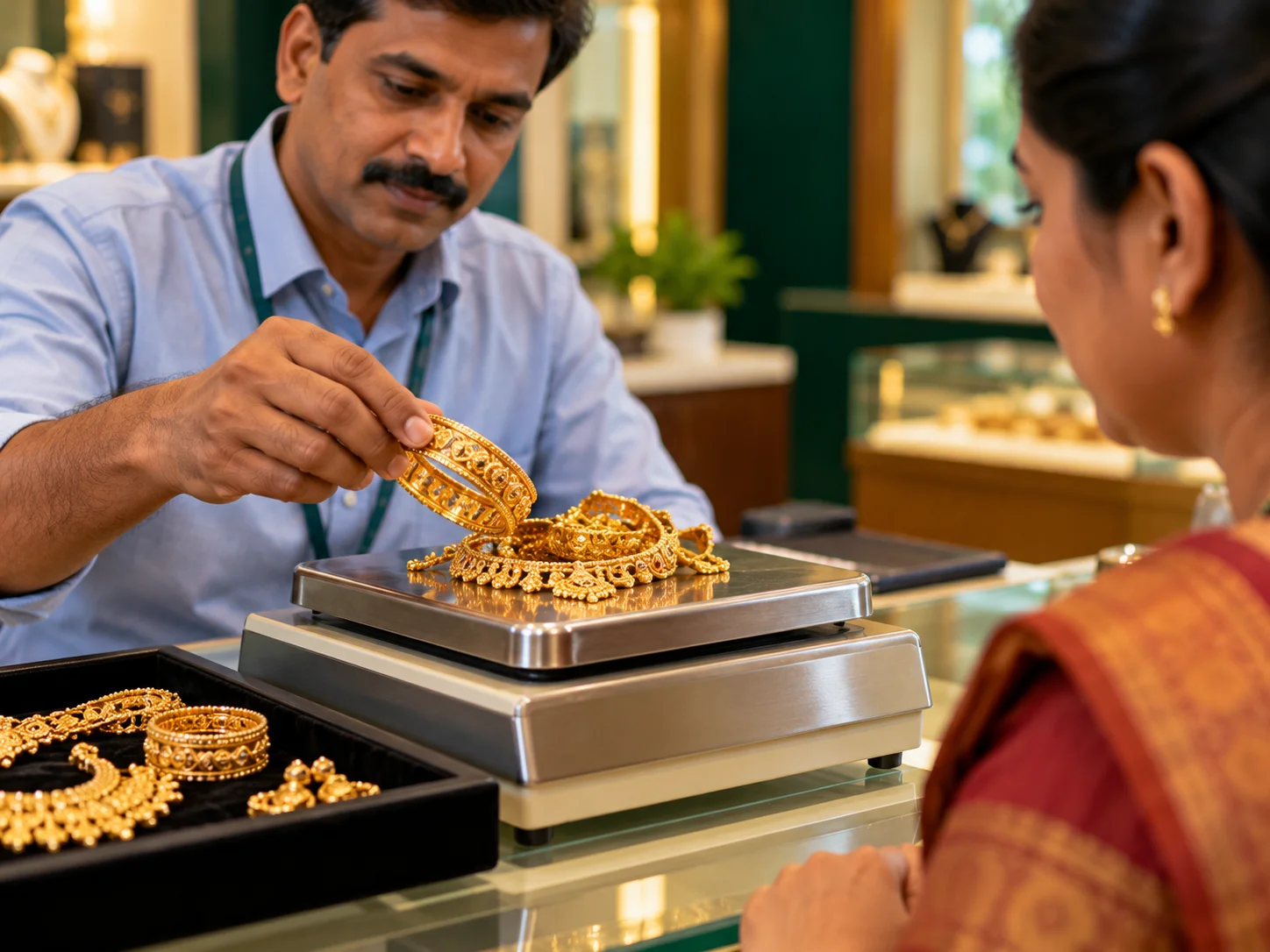
Gold Loans Explained: What Every Customer Should Know Before Applying 1. Understanding How Gold Loans Work Gold jewellery often has financial and personal significance for families. In certain circumstances, a customer may consider using eligible gold jewellery as security to obtain a loan for an essential expense or a temporary financial requirement. In a gold loan, the customer pledges eligible gold items to the lender under an agreed loan arrangement. The lender assesses the gold and determines the amount that may be offered according to its valuation process, applicable rules, lending conditions, and the customer's eligibility. The pledged jewellery is held as security during the loan period. The customer must repay the loan according to the agreed terms to obtain its release. A gold loan should not be treated as free money or as a substitute for understanding household finances. Before pledging jewellery, customers should establish the exact amount needed, the expected source of repayment, and whether the repayment schedule is realistic. 2. How Gold Purity and Valuation Affect the Loan The amount offered for pledged gold depends on the lender's assessment and the applicable lending conditions. Gold valuation is not necessarily equal to the jewellery's original purchase price or its retail selling price. The assessment may consider factors such as: - The weight of eligible gold. - The purity of the gold. - The lender's applicable valuation method and reference price. - The presence of stones or other materials that do not qualify as gold. - Applicable lending limits, eligibility conditions, and regulatory requirements. Jewellery may contain gemstones, decorative elements, or other materials. Customers should ask how these components are treated during valuation and whether only the eligible gold content is considered. The final amount offered may therefore differ from the customer's expectations. Do not assume that every ornament will qualify or that a particular loan amount is guaranteed. 3. Understand Interest, Fees, and the Total Cost Before accepting a gold loan, request a clear explanation of the applicable interest rate and how interest will be calculated. The total cost may also include applicable processing fees, valuation charges, or other charges specified in the agreement. Ask whether interest must be paid periodically, whether repayment can be made through instalments, and whether the principal is payable at a specified time. The repayment structure varies by product, and customers should not assume that all gold loans have identical terms. For illustration, a customer borrowing money for a short-term household expense should calculate the amount that will be due under the actual agreement and compare it with expected income. The purpose of the calculation is to understand the commitment before pledging jewellery, not to assume a particular rate or repayment arrangement. Request written information about the amount borrowed, interest, fees, due dates, and any charges associated with late payment or early closure. If the agreement is unclear, ask for an explanation before signing. 4. Choose a Loan Amount and Tenure Carefully Borrow only what is required for the identified purpose and what can reasonably be repaid. A larger loan may increase interest costs and financial pressure without providing a corresponding benefit. Estimate the income or funds that will be available for repayment. Consider existing loan instalments, household expenses, education costs, medical needs, and other financial obligations. The tenure should fit the borrower's repayment plan. A shorter period may require a repayment schedule that the customer can meet promptly, while a longer period may create additional interest costs depending on the product. The actual effect depends on the agreement. Customers should ask what happens if income is delayed and whether any contractual options apply in such circumstances. Never assume that an extension, renewal, or additional borrowing will automatically be approved. 5. Documentation, Receipts, and Secure Record-Keeping Before pledging jewellery, confirm the documents required by the lender. These may include identity and address proof, photographs, bank account details, and other documentation required under the applicable process. The lender should provide the relevant loan documentation and an appropriate record of the gold items accepted as security. Customers should carefully check the description of the pledged items, the assessed details, and the terms recorded in the documents. Retain the loan agreement, pledge receipt, valuation information where provided, payment acknowledgements, and other relevant records. These documents may be important when making repayments, asking questions, or requesting the release of the jewellery. Do not sign blank forms or accept explanations that leave essential terms unclear. Keep copies of the records in a safe place and use the lender's verified official contact channels if any discrepancy arises. 6. Understand the Conditions for Releasing Pledged Jewellery Customers should understand how and when the pledged jewellery can be released. The applicable conditions will be specified in the loan agreement and may require settlement of outstanding principal, interest, and other amounts properly payable under the terms. Before taking the loan, ask: - What amount must be paid to close the loan? - How can the outstanding balance be confirmed? - Which documents are required for release? - How will the return of the pledged items be acknowledged? - What procedure should be followed if the customer identifies a discrepancy? After repayment and release, retain the closure confirmation and relevant receipts. Check the returned items against the available records before leaving the designated collection process. The exact procedure should be confirmed with the lender because the requirements and timelines depend on the applicable agreement and process. 7. What Happens If Repayment Is Delayed? Failure to repay a gold loan on time can result in additional charges, continued interest where applicable, and other consequences specified in the agreement. If the default remains unresolved, the lender may have contractual and legally applicable rights to enforce its security, which can include sale or auction of pledged gold after following the required procedure. This can result in the customer losing jewellery that may have significant personal or family value. Customers should therefore understand the default provisions before accepting the loan. If repayment difficulties arise, contact the lender through verified channels as early as possible. Ask about the outstanding amount and any options available under the existing agreement. Do not ignore notices or rely on an informal promise that repayment obligations will be suspended. Customers should not assume that a lender will automatically extend the tenure or prevent enforcement simply because the jewellery has sentimental value. 8. Borrow Responsibly and Protect Family Interests Gold jewellery may represent family savings, gifts, or assets accumulated over many years. Before pledging it, discuss the financial requirement with relevant family members where appropriate and consider whether other suitable funding options are available. Avoid taking a gold loan for an expense that can be postponed or for speculative activities that could create additional financial risk. Be cautious about borrowing from multiple lenders without calculating the combined repayment obligations. Do not pledge jewellery through an unverified intermediary promising guaranteed approval or unusually favourable terms. Use authorised channels, understand the agreement, and ensure that the pledged items are properly documented. 9. Questions to Ask Before Pledging Gold Before proceeding, customers should ask: 1. Is the gold loan currently available under the lender's products? 2. Which gold items are eligible? 3. How will purity, weight, and valuation be assessed? 4. How is the eligible loan amount determined? 5. What interest rate and charges apply? 6. What are the repayment schedule and maturity conditions? 7. What happens if a payment is delayed? 8. Under what conditions may pledged jewellery be sold or auctioned? 9. What documents and receipts will be provided? 10. What is the exact procedure for releasing the jewellery after repayment? Obtain clear answers and review the complete terms before handing over jewellery. Conclusion A gold loan may provide financial support when an eligible customer has a genuine need and a realistic repayment plan. However, the decision requires careful consideration of gold valuation, interest, fees, repayment obligations, and the consequences of default. Customers interested in a gold loan may contact PLD Bank Honnavar through its verified official channels or visit an authorised branch to enquire about current availability and terms. Interest rates, eligibility, valuation procedures, documentation, and repayment conditions should be confirmed directly with the bank. Understanding the agreement before pledging jewellery helps customers protect their financial interests and make more informed decisions.